

5.0Freemium 724.2k/mo
AI photo editor for background removal, batch processing, and image enhancement.
AI photo editorBackground removerBatch editor
AI Image Detectors are a specialized subset of AI Detection & Anti-Detection tools that analyze visual content to determine whether an image was generated by artificial intelligenc…
26 curated for this page · 65 tools in this niche
By relevance & traffic
AI photo editor for background removal, batch processing, and image enhancement.

RealorAI: A tool to differentiate real from AI-generated images through interactive tests.
AI-powered API to detect NSFW content in images, scoring from 0.0 to 1.0.

AI-powered facial recognition and ID verification platform for privacy and fraud prevention.

AI platform to verify photo locations globally, ensuring authenticity and countering misinformation.
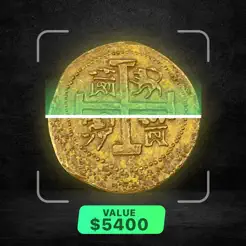
AI-powered mobile app for identifying coins and tracking their value.


Video Watermark Remover by AIAI.com is an advanced, AI-powered online utility designed to seamlessly erase watermarks, logos, text overlays, and timestamps from both videos and images. As part of the broader AIAI.com creative suite, it leverages cutting-edge artificial intelligence to reconstruct background textures instantly, ensuring high-quality, artifact-free results without the need for complex software installation.

Google Cloud Vision AI uses machine learning to understand image content.

Browser extension to block phobia-inducing images using machine learning.




Image search tool for finding and verifying editorial and creative images.

AI-powered plant identification app for quick and accurate plant recognition.

AI-powered solution for automated road patrolling and asset data collection.

AI-assisted data labeling tool for fast object detection and dataset creation.

AI-powered app for instant logo and brand identification with detailed information.

Reality Check verifies the authenticity of images, distinguishing real photos from AI-generated ones.

An iPhone app for quick mushroom identification using AI.



AI Image Detector — AI Image Detectors are a specialized subset of AI Detection & Anti-Detection tools that analyze visual content to determine whether an image was generated by artificial intelligence or captured by a camera. Unlike general image recognition systems that identify objects or scenes, these detectors focus on authenticity verification, identifying artifacts, patterns, or metadata indicative of AI generation. They are essential for content moderators, security teams, and journalists who need to verify image provenance, detect deepfakes, or enforce platform policies against misleading visuals. However, no detector is infallible; accuracy varies with generator models and image quality, requiring human oversight for critical decisions.
Best For: Content moderators verifying user-uploaded images; Security professionals detecting deepfakes in identity verification; Journalists and fact-checkers authenticating visual evidence Not Ideal For: General image tagging or categorization tasks; Simple photo editing or enhancement workflows; Real-time object detection in video streams Summary: AI Image Detectors best serve roles that need to verify image authenticity rather than analyze content, such as trust and safety teams, security professionals, and journalists. They are not suitable for general computer vision tasks or image editing.
The typical workflow begins with uploading or submitting an image via a web interface or API. The tool then analyzes the image for artifacts, patterns, or metadata indicative of AI generation, often using machine learning models trained on both real and AI-generated images. It returns a verdict (AI-generated or real) with a confidence score or probability, sometimes highlighting suspicious regions. Users review the results and decide on actions like flagging or approving the image. The tool does not modify the image itself.
Using AI Image Detectors helps maintain trust by identifying misleading AI-generated images, reduces manual review effort for content moderation at scale, and supports compliance with authenticity verification regulations. However, no detector is foolproof; accuracy can degrade with new generative models, compressed images, or adversarial examples, so human oversight remains essential.
An AI Image Detector is a tool that analyzes visual content to determine whether it was generated by artificial intelligence or captured by a camera. It focuses on authenticity verification rather than object recognition or image enhancement.
Accuracy varies widely depending on the detector and the AI generator used. No tool is 100% reliable, and false positives or negatives can occur, especially with compressed images or advanced generative models. Human review is often needed to confirm results.
Detection capability depends on the training data of the detector. Some detectors may perform well on images from popular generators like DALL-E or Midjourney but struggle with newer or less common models. Performance can degrade as generators evolve.
Most detectors handle common formats like JPEG, PNG, and WebP. They can analyze images from various sources, including social media, screenshots, and compressed files, but quality and compression may affect accuracy.
Many detectors offer user-friendly web interfaces that require minimal technical knowledge. For automated or high-volume use, API access may be available but typically requires basic programming skills to integrate.
Consider factors like detection accuracy, supported image formats, integration options (API vs. web app), cost scalability for your volume, and whether the tool provides confidence scores or detailed reports. Evaluate trial versions to test performance on your specific use cases.