
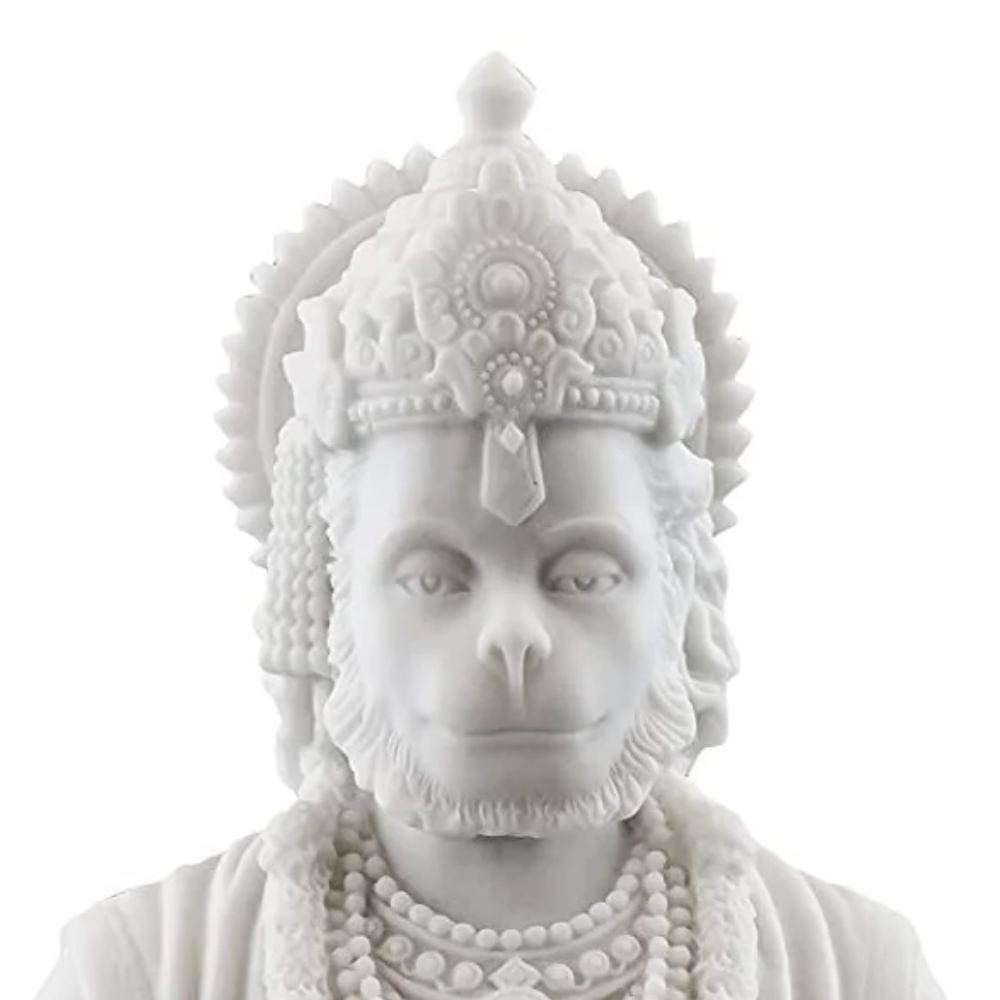
In-depth review: Ramayana meets AI
Ramayana meets AI occupies an unusual but earnest niche: it is a free, AI-powered Q&A platform that draws exclusively on award-winning English translations of Valmiki’s and Tulsidas’ Ramayan, using Google’s PaLM model to generate responses. The premise is compelling—an interactive conversation with the sages of yore—but the execution is constrained by the very technology that enables it. This is not a replacement for scholarly study or a comprehensive scriptural database; rather, it is a lightweight entry point for anyone seeking quick clarifications on characters, events, or verses within these two specific translations. Where the tool stands out is in its curation. By limiting its knowledge base to curated translations, it avoids the noise and inconsistency of general web searches. The inclusion of citation links in superscript is a thoughtful touch, allowing users to verify answers against source sections—a feature that researchers and careful readers will appreciate. However, the reliance on PaLM means answers tend to be concise, sometimes frustratingly so. Complex or multi-part questions often fail, and the AI can default to one translation when a comparative perspective would be more illuminating. The tool fits best into a workflow of rapid lookup and casual exploration. A student preparing for an exam might use it to confirm the sequence of events in the Aranya Kanda; a devotee could quickly locate the verse where Rama breaks Shiva’s bow; a curious newcomer can ask broad questions like “What is the Ramayan about?” and receive a digestible summary. For deeper analysis—say, comparing interpretations of dharma across different episodes—the tool’s brevity becomes a liability. It is not designed for nuanced theological debate or for handling ambiguous queries that require contextual judgment. Who benefits most? Students and lifelong learners who need a study aid, researchers who want a starting point for locating specific passages, and devotees seeking an interactive way to engage with the epic. Religious scholars may find it useful as a quick reference but should approach AI-generated interpretations with caution, especially given the tool’s reliance on a single translation for each version. The platform’s free, no-registration model lowers barriers, but it also means no advanced features like saving queries, tracking history, or customizing the knowledge base. A practical buyer or operator should view Ramayana meets AI as a supplement, not a primary source. Its value lies in accessibility and speed, not depth. For those willing to work within its limitations—asking simple, focused questions and cross-referencing citations—it can be a surprisingly effective gateway into one of the world’s great epics. But anyone expecting a scholarly assistant or a multi-scripture chatbot will likely find the answers too short, the scope too narrow, and the AI’s interpretive leaps occasionally off the mark.
Who it's built for
Students
Why it fits
The tool provides quick, AI-generated answers to specific questions about Ramayan plots, characters, and moral lessons, making it a useful study aid for exam preparation or assignments.
Best value
Instant access to cited verses from award-winning translations saves time on manual searching.
Caution
Answers may be too brief for in-depth analysis or complex thematic questions; students should verify with primary sources.
Researchers
Why it fits
Researchers can use the tool as a rapid reference for specific verses, events, or character details, with citation links enabling quick verification.
Best value
The ability to cross-reference Valmiki and Tulsidas translations for comparative study.
Caution
The AI may not handle nuanced or comparative questions well, and the knowledge base is limited to the Ramayan only.
Religious scholars
Why it fits
Scholars can explore interpretations and access translated verses with superscript citations, aiding in sermon preparation or textual analysis.
Best value
The conversational interface simulates dialogue with ancient sages, offering a unique perspective.
Caution
AI-generated interpretations may not align with traditional scholarly consensus; use as a supplementary tool.
Individuals interested in learning about the Ramayan
Why it fits
The free, no-registration platform lowers the barrier for newcomers to ask questions and explore the epic interactively.
Best value
Simple, direct answers help beginners grasp key events and characters without overwhelm.
Caution
Broad or open-ended questions may yield short responses; users may need to ask more specific follow-ups.
Key features
AI-Powered Q&A about the Ramayan
Users ask questions in natural language and receive generative AI answers based on the Ramayan translations.
Benefit
Enables instant, conversational access to information without manual searching.
Limitation
Complex or lengthy questions may fail; answers can be short and lack depth for nuanced queries.
Access to English Translations of Valmiki and Tulsidas' Ramayan
The platform uses award-winning English translations as its knowledge base, covering both Valmiki and Tulsidas versions.
Benefit
Provides a curated, authoritative foundation for answers, with potential for comparative insights.
Limitation
Only these two translations are included; other versions or original Sanskrit are not available.
Generative AI Responses Powered by Google's PaLM AI
Google's PaLM model generates responses, aiming for coherence and contextual relevance.
Benefit
Leverages advanced AI for fluent, context-aware answers with quick response times.
Limitation
PaLM may occasionally produce inaccurate or overly generic answers, especially for ambiguous queries.
Citation Links in Responses
Answers include superscript numbers that link to the source sections in the translations.
Benefit
Enables users to verify answers and explore original context, enhancing trustworthiness.
Limitation
Citations may not always point to the most relevant verse; accuracy depends on the AI's retrieval.
Free and No Registration Required
The tool is completely free to use with no sign-up or payment needed.
Benefit
Removes barriers to access, making it easy for anyone to start asking questions immediately.
Limitation
No premium features or advanced customization; reliance on free tier may limit future scalability.
Real-world use cases
Learning About the Ramayan Through Interactive Q&A
StudentScenario
A student preparing for an exam asks, 'What is the significance of Hanuman's role in the Ramayan?'
Solution
The AI generates a concise answer summarizing Hanuman's loyalty and key deeds, with citations to relevant sections.
Outcome
Provides a quick overview and direct source references, saving study time.
Exploring Different Perspectives and Interpretations
ResearcherScenario
A researcher wants to compare how Valmiki and Tulsidas describe the meeting of Rama and Hanuman.
Solution
The user asks separate questions about each version; the AI pulls from the respective translation and cites differences.
Outcome
Enables side-by-side comparison without manually cross-referencing texts.
Quickly Finding Answers to Specific Questions
DevoteeScenario
A devotee asks, 'In which verse does Rama break Shiva's bow?'
Solution
The AI responds with the exact verse reference and a brief description, including a citation link.
Outcome
Delivers precise information rapidly, ideal for devotional study or reference.
Using the Tool for Casual Exploration
Curious individualScenario
A curious reader asks, 'What is the Ramayan about?'
Solution
The AI provides a short summary of the epic's storyline, but the answer may be too brief for a comprehensive overview.
Outcome
Offers a low-friction entry point for newcomers to get a basic understanding.
Pros & cons
Pros
- Provides quick and accessible answers to questions about the Ramayan
- Combines traditional texts with modern AI technology
- Offers a unique way to learn and explore the Ramayan
Cons
- Answers may be short and require further exploration
- Accuracy depends on the quality of the AI model and training data
- Complex questions may not be answered effectively
Company information
Parsed from directory fields (lists, definition lists, or plain lines). Keys with 「: / :」 show as cards when most lines match; otherwise as a list. Confirm on official sources.
- Ramayana meets AI Support Email & Customer service contact & Refund contact etc. Here is the Ramayana meets AI support email for customer service: [email protected] .
- Ramayana meets AI Linkedin Ramayana meets AI Linkedin Link: https://linkedin.com/in/vineetsinha1
- Ramayana meets AI Twitter Ramayana meets AI Twitter Link: https://twitter.com/sinhasinha
- Ramayana meets AI Instagram Ramayana meets AI Instagram Link: https://www.instagram.com/vineeters/
Frequently asked questions
How much does Ramayana meets AI cost?Pricing
Ramayana meets AI is completely free to use. There are no pricing tiers or subscription plans. You can ask questions without any payment or registration.
Can I add my own Ramayan translations or texts?Workflow
Yes, you can contribute by emailing the text of a Ramayan document to [email protected]. Only text documents are accepted, not images. However, there is no guarantee that submitted texts will be integrated immediately.
Why are the answers sometimes short or incomplete?Limitations
The generative AI is designed for quick responses. If your question is too long or complex, the tool may not answer at all. For better results, ask simpler, more specific questions. Also, the referenced sections below the answer provide additional context.
Does the tool support languages other than English?General
Currently, the tool only supports English. The translations used are English versions of Valmiki and Tulsidas' Ramayan. Questions in other languages may not be processed correctly.
How accurate are the AI-generated answers?General
Accuracy varies. The AI uses award-winning translations and Google's PaLM, but it can still produce errors or overly generic responses. Always verify critical information with the cited sources or original texts.
Can I use this tool for academic research?Fit
It can be a useful starting point for quick references and citations, but due to potential inaccuracies and brevity, it should not be relied upon as a sole source. Cross-check with primary texts and scholarly works.
Related tools in AI Religion

Private, uncensored AI for generating text, images, code, and characters.


AI meeting assistant for real-time transcription, summaries, and action items.

AI-powered wellness platform for personalized anti-aging hair and skin products.

Chrome extension AI assistant for chatting, copywriting, translation, and more.

Platform for creating and interacting with AI girlfriends through chat, visuals, and voice.